Toolkit guide
Source
Amnesty International
Topic
Mental Health and Youth Activism
Tools & Frameworks
Workbook
Use it to…
Equip young advocates with tools for managing the emotional demands of sustained policy work.
Image
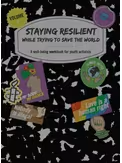
Staying Resilient While Trying to Save the World (Volume 2): A Well-Being Workbook for Youth Activists
Health Area
Area
4.2
Description

Volume 2 in Amnesty International's 'Staying Resilient While Trying to Save the World' series was developed alongside youth activists from across the globe. It explores themes of burnout, stress, peer support and self-care, showing how happiness and human rights activism can co-exist. The workbook includes personal stories, practical exercises and guidance to help young people maintain resilience.
Brief description
A well-being workbook for young activists, co-created with Amnesty International's Global Youth Collective, offering tools and reflections to sustain activism while protecting mental health.
Keywords
resilience, well-being, youth activists, advocacy, burnout
Resource Title
Staying Resilient While Trying to Save the World (Volume 2): A Well-Being Workbook for Youth Activists
Source
UNICEF
Topic
Mental Health and Youth Engagement
Tools & Frameworks
Toolkit
Use it to…
Support the well-being of young people in sustained health engagement roles.
Image
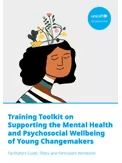
Training Toolkit on Supporting the Mental Health and Psychosocial Wellbeing of Young Changemakers
Health Area
Area
4.2
Description

The toolkit includes a facilitator's guide, presentation slides and a participant workbook. It covers topics such as understanding stress and burnout, building protective factors, accessing support, and developing peer support skills. It is designed for delivery in online and offline settings with young people who are actively engaged in advocacy, activism or community change efforts.

Brief description
Facilitators Guide, Slides and Participant Workbook which provides the roadmap for skilled facilitators to deliver an online training to young changemakers to equip them with the knowledge, skills, and supports to protect and promote their mental health and psychosocial wellbeing.
Keywords
mental health, well-being, young changemakers, staff training, burnout
Resource Title
Training Toolkit on Supporting the Mental Health and Psychosocial Wellbeing of Young Changemakers
Source
UNFPA / FHI 360 / Y-PEER
Topic
Peer Education and Youth-Led Implementation
Tools & Frameworks
Guidelines
Use it to…
Design and quality-assure peer education and youth-led implementation programmes.
Image
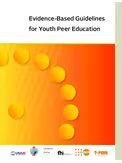
Evidence-Based Guidelines for Youth Peer Education
Health Area
Area
4.1
Description

The guidelines draw on research and programme experience to set out standards for youth peer education, covering programme planning, recruitment, training and supervision of peer educators, youth-adult partnership, retention, monitoring and evaluation. They were developed with the Y-PEER network and are widely used in sexual and reproductive health and other health programmes.

Brief description
Guidelines for designing, implementing and quality-assuring youth peer education programmes.
Keywords
peer education, implementation, youth-led, quality assurance, health programmes
Resource Title
Evidence-Based Guidelines for Youth Peer Education
Source
Council of Europe
Topic
Youth Co-Management and Governance
Tools & Frameworks
Model / Guidance
Use it to…
Establish formal governance roles for young people in health structures.
Health Area
Area
4.1
Description

The co‑management model is a distinctive feature of the Council of Europe youth sector, bringing together elected youth representatives and government officials on an equal footing in joint decision‑making bodies. It goes beyond consultation by embedding youth participation directly into governance structures, including agenda‑setting, resource allocation and policy oversight.

Brief description
A governance model that institutionalises shared decision‑making between young people and public authorities in youth policy.
Keywords
co-management, shared decision-making, co-governance, Council of Europe, advisory structures
Resource Title
Council of Europe youth co‑management model
Source
UNICEF
Topic
Youth Governance and Councils
Tools & Frameworks
Guidance
Use it to…
Set-up co-design processes and sustained advisory mechanisms with governance influence.
Image
Child and Youth Councils: Guidance to Support Meaningful Participation
Health Area
Area
4.1
Description

This UNICEF guidance document covers the purpose, design, facilitation and governance of child and youth councils. It addresses inclusivity, representation, safeguarding, and how to ensure that councils have genuine influence over decisions that affect young people rather than serving a tokenistic function.

Brief description
Guidance on how to set up and sustain child and youth councils as spaces for meaningful participation in decision-making at community, national and organisational levels.
Keywords
youth councils, advisory bodies, co-governance, platforms, representation
Resource Title
Child and Youth Councils: Guidance to Support Meaningful Participation
Source
WHO / TDR
Topic
Co-creation and Health Programmes
Tools & Frameworks
Guide
Use it to…
Apply a step-by-step co-creation framework to health programmes and policies co-led by young people.
Health Area
Area
4.1
Description

Developed by WHO/TDR and the Social Innovation in Health Initiative (SIHI) based on good practices collected worldwide, the guide sets out a step-by-step co-creation framework for health programmes and research co-led by young people, from planning and partnership-building to implementation and evaluation.

Brief description
A practical guide on co-creating health programmes, research and policies with young people.
Keywords
co-creation, co-design, health programmes, research, youth-led
Resource Title
Youth Co-creation for Health: A Practical Guide
Source
UNICEF
Topic
Participation and Engagement
Tools & Frameworks
Tipsheets
Use it to…
Prepare facilitators and participants for their specific role.
Image
Tip Sheets for Adults, Adolescents and Youth on Adolescent and Youth Participation in Different Settings
Health Area
Area
4.1
Description

UNICEF's tip sheet series covers a range of participation settings including humanitarian contexts, schools, community events, and online spaces. Each sheet provides targeted, actionable tips for adults, adolescents and young people to support ethical, safe and meaningful engagement.

Brief description
UNICEF's tip sheets on adolescent and youth participation provide actionable guidance for adults, youth, and adolescents to ensure meaningful, safe, and ethical engagement across different settings. These resources, including tips for adults, emphasize rights-based, inclusive approaches designed to foster civic engagement and influence decision-making.
Keywords
tip sheets, facilitators, participation settings, adults, adolescents
Resource Title
Tip Sheets for Adults, Adolescents and Youth on Adolescent and Youth Participation in Different Settings
Source
UNICEF
Topic
Consultations
Tools & Frameworks
Brief
Use it to…
Check practical requirements for before and during any consultation event.
Image
Must-Do’s for Consultations with Young People
Health Area
Area
4.1
Description

This short document focuses on the practical essentials of youth consultation, covering preparation, information‑sharing, safeguarding, consent, facilitation, and follow‑up. It is designed as a “minimum standard” to ensure that consultations do no harm and are respectful, transparent and inclusive, especially in sensitive policy areas such as health.

Brief description
A concise checklist outlining the minimum standards for ethical and meaningful consultations with young people.
Keywords
consultation, checklist, minimum standards, consent, safeguarding
Resource Title
Must-Do’s for Consultations with Young People
Source
UNICEF
Topic
Consultations
Tools & Frameworks
Guidance
Use it to…
Apply a rights-based framework to every stage of consultation design and delivery.
Image
Guidance on Consultations with Young People
Health Area
Area
4.1
Description

This guidance covers the full consultation cycle, from design and preparation to facilitation and follow-up. It sets standards for safe, inclusive and ethical engagement with young people aged 10–24, including attention to diverse groups and the prevention of harm. It also provides templates, tips and considerations for different consultation settings.

Brief description
Guidance to practitioners and policy makers to conduct consultations with young people (age 10-24) on matters that concern them.
Keywords
consultation, consultation cycle, rights-based approach, facilitation, follow-up
Resource Title
Guidance on Consultations with Young People
Source
UNICEF
Topic
Participation and LGBTIQ+
Tools & Frameworks
Brief
Use it to…
Adapt engagement and safeguarding for LGBTIQ+ young people.
Image
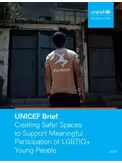
Brief on Creating Safer Spaces for LGBTIQ+ Young People
Health Area
Area
3.2
Description

This brief outlines practical actions for organisations to create inclusive and safer participation spaces for LGBTIQ+ young people. It covers terminology, risk assessment, facilitation approaches, referral pathways and communication strategies to ensure that LGBTIQ+ young people can participate without discrimination or harm.

Brief description
Practical actions to create safer spaces that support the meaningful and safe participation of lesbian, gay, bisexual, trans/transgender, intersex, queer/questioning and other (LGBTIQ+) young people in programming and advocacy work.
Keywords
LGBTIQ+, safer spaces, inclusion, safeguarding, marginalised groups
Resource Title
Brief on Creating Safer Spaces for LGBTIQ+ Young People