Toolkit guide
Source
WHO
Topic
well care visits
Tools & Frameworks
Guidelines
Language
EN
Use it to…
Encourage routine contact points for promotion, prevention and early identification across childhood and adolescence.
Where to look in this resource
The whole document is relevant, as it sets out a schedule of routine contact points — from birth through adolescence — each mapped to specific promotion, prevention, and early-identification actions.
Setting
Year
2024
Area
2.2
Brief description
Guidance on planning routine well-care visits to support child and adolescent health and wellbeing.
Country
INTERNATIONAL
Keywords
well-care visits, routine contact points, early identification, service managers, prevention
Source
WHO
Topic
well care visits
Tools & Frameworks
Guidelines
Language
EN
Relevant actions
Layer 2
Use it to…
framework for embedding mental health within routine child and adolescent health contacts
Where to look in this resource
The whole document is relevant, as it sets out a schedule of routine contact points — from birth through adolescence — each mapped to specific promotion, prevention, and early-identification actions.
Image
Improving the health and wellbeing of children and adolescents: guidance on scheduled child and adolescent well-care visits (WHO 2024)
Setting
Year
2024
Area
2.2
Description

This guidance is primarily aimed at policy makers and managers responsible for designing and managing health and wellbeing services for children and adolescents, and health and non-health care providers.

Brief description
Guidance on planning routine well-care visits to support child and adolescent health and wellbeing.
Country
INTERNATIONAL
Keywords
well-care visits, routine contact points, early identification, service managers, prevention
Resource Title
Improving the health and wellbeing of children and adolescents: guidance on scheduled child and adolescent well-care visits (WHO 2024)
Source
WHO
Topic
Enhancing caregiver child relationships to support healthy development
Tools & Frameworks
Guidelines
Language
EN
Relevant actions
Action 3
Use it to…
strengthen parenting support through existing service platforms
Where to look in this resource
The recommendations are the practical core (with the executive summary giving the headline recommendations); for implementation, these are the basis for delivering parenting support through existing health, social and community platforms (Action 3).
Image
WHO guidelines on parenting interventions to prevent maltreatment and enhance parent–child relationships with children aged 0–17 years (WHO 2023)
Year
2023
Area
3.1
Description

Evidence-based recommendations on parenting interventions for parents and caregivers of children aged 0–17 years that are designed to reduce child maltreatment and harsh parenting, enhance the parent–child relationship, and prevent poor mental health among parents and emotional and behavioural problems among children

Brief description
WHO recommendations on parenting interventions that strengthen caregiving and reduce risks to children’s wellbeing.
Country
INTERNATIONAL
Keywords
parenting interventions, child maltreatment prevention, parent-child relationship, evidence-based, caregivers
Resource Title
WHO guidelines on parenting interventions to prevent maltreatment and enhance parent–child relationships with children aged 0–17 years (WHO 2023)
Source
WHO
Topic
Enhancing caregiver child relationships to support healthy development
Tools & Frameworks
Guidelines
Language
EN
Relevant actions
Layer 1
Use it to…
strengthen the case for family-based prevention strategies that support child development and mental wellbeing.
Where to look in this resource
The recommendations are the practical core (with the executive summary giving the headline recommendations); the remainder sets out the evidence base and the guideline development process.
Image
WHO guidelines on parenting interventions to prevent maltreatment and enhance parent–child relationships with children aged 0–17 years (WHO 2023)
Year
2023
Area
2.2
Description

Evidence-based recommendations on parenting interventions for parents and caregivers of children aged 0–17 years that are designed to reduce child maltreatment and harsh parenting, enhance the parent–child relationship, and prevent poor mental health among parents and emotional and behavioural problems among children

Brief description
WHO recommendations on parenting interventions that strengthen caregiving and reduce risks to children’s wellbeing.
Country
INTERNATIONAL
Keywords
parenting interventions, child maltreatment prevention, parent-child relationship, evidence-based, caregivers
Resource Title
WHO guidelines on parenting interventions to prevent maltreatment and enhance parent–child relationships with children aged 0–17 years (WHO 2023)
Source
UNICEF
Topic
Enhancing caregiver child relationships to support healthy development
Tools & Frameworks
Framework
Language
EN
Relevant actions
Layer 1
Use it to…
shape a multisectoral early-years approach that connects parenting support with child development outcomes.
Where to look in this resource
The framework itself (“Parenting support framework for the early years”) and the “Using the framework” section are the practical core, introduced by the earlier sections on the power of parenting.
Image
Parenting support framework for the early years (UNICEF ECARO 2024)
Year
2024
Area
2.2
Description

A conceptual framework that provides a unified vision of multi-sectoral support for parents and parenting in the early years (from pregnancy to 8 years of a child’s age). It aims to bring together different stakeholders and sectors to accelerate results for young children and their families through a system-strengthening approach, and by leveraging social and behavioural change guidance and strategies. 

Brief description
Conceptual framework for building coordinated, multisectoral parenting support systems in the early years.
Country
EUROPE
Keywords
early years, multisectoral, system-strengthening, social & behavioural change, parenting support
Resource Title
Parenting support framework for the early years (UNICEF ECARO 2024)
Source
WHO
Topic
Digital determinants
Tools & Frameworks
Policy Brief
Language
EN
Relevant actions
Layer 1
Use it to…
eight priority actions to promote and protect mental health online, covering social media, AI and digital risk regulation
Where to look in this resource
The whole document is relevant in its entirety: it summarises the current evidence on the impact of digital environments on youth mental health and translates it into eight priority actions for policy responses.
Image
Addressing the digital determinants of youth mental health and well-being: policy brief (WHO EURO 2025)
Year
2025
Area
2.2
Description

Examines how digital environments influence youth mental health, including both risks and opportunities. It synthesises emerging evidence and provides policy recommendations to promote safer, healthier digital experiences for young people.

Brief description
Policy brief on how digital environments affect youth mental health and what policy responses are needed.
Country
EUROPE
Keywords
digital determinants, online risks & opportunities, policy recommendations, youth mental health
Resource Title
Addressing the digital determinants of youth mental health and well-being: policy brief (WHO EURO 2025)
Source
UNICEF
Topic
youth participation
Tools & Frameworks
Framework
Language
EN
Relevant actions
Action 4
Use it to…
take a structured, evidence-informed approach to integrating adolescent perspectives into policy design, implementation and evaluation.
Where to look in this resource
The whole guide is relevant to embedding participation. Its practical core includes the essential features of meaningful participation (the "space, voice, audience and influence" framework), the modes of participation (consultative, collaborative and adolescent-led), and the sections on applying a rights-based approach and ensuring equity and inclusion — supported by tools for monitoring, evaluation and implementation across sectors.
Image
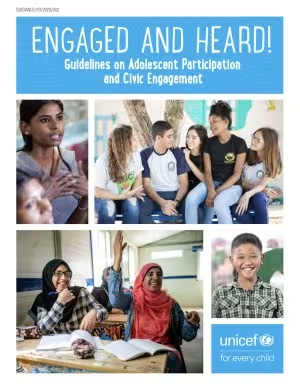
Engaged and Heard (UNICEF 2020)
Setting
Year
2020
Area
2.3
Description

Detailed guidance on the principles, strategies, and practical steps needed to support adolescent participation across sectors and contexts. Grounded in a rights-based approach aligned with the UN Convention on the Rights of the Child, it defines participation as adolescents’ ability to form, express, and influence decisions on issues affecting them . The guidelines outline key concepts such as inclusive and equitable participation, the importance of “space, voice, audience and influence” (illustrated in the framework on page 12), and different modes of engagement ranging from consultative to adolescent-led processes. It also presents a systems-oriented approach, including policy advocacy, capacity-building, and the creation of sustainable platforms for engagement, supported by tools for monitoring, evaluation, and implementation across sectors like health, education, and child protection.

Brief description
A comprehensive framework for enabling meaningful, rights-based participation of adolescents in decision-making processes that affect their lives.
Country
INTERNATIONAL
Keywords
adolescent participation, rights-based, space voice audience influence, co-design, monitoring & evaluation
Resource Title
Engaged and Heard (UNICEF 2020)
Source
WHO
Topic
stigma
Tools & Frameworks
Toolkit
Language
EN
Relevant actions
Layer 1
Use it to…
practical approaches to reducing stigma and promoting mental health inclusion across systems and settings
Where to look in this resource
The whole document is relevant, as it sets out a four-step, evidence-based process — built on lived-experience leadership, social contact, and inclusive collaboration — for planning, delivering, and evaluating anti-stigma initiatives across health, workplace, school, and community settings.
Image
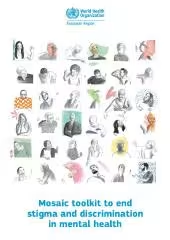
Mosaic toolkit to end stigma and discrimination in mental health
Age group
Setting
Area
2.2
Description

A structured and evidence-informed approach to reducing stigma and discrimination associated with mental health conditions. It is grounded in three core principles—leadership by people with lived experience, social contact, and inclusive collaboration—and translates these into a practical four-step process for designing, implementing, and scaling anti-stigma interventions. The toolkit combines conceptual guidance with actionable steps and real-world case studies, enabling adaptation across different policy, service, and community contexts. It also highlights the systemic nature of stigma, including its impact on access to care, social inclusion, and life opportunities, and emphasises the role of coordinated, multisectoral action in addressing these challenge

Brief description
Provides practical, evidence-based guidance for designing and implementing interventions to reduce stigma and discrimination in mental health.
Country
INTERNATIONAL
Keywords
stigma, discrimination, lived experience leadership, social contact, four-step process
Resource Title
Mosaic toolkit to end stigma and discrimination in mental health

Topic
Digital determinants
Tools & Frameworks
Policy Brief
Language
EN
Relevant actions
Actions 2 & 4
Use it to…
understand the digital determinants of mental health and the inequalities and rights issues they raise.
Where to look in this resource
A short, focused brief — read it in full. It covers digital risks and benefits and their mental-health implications (Action 2), and digital inequalities and the child-rights dimension — who is most exposed and least protected (Action 4).
Image
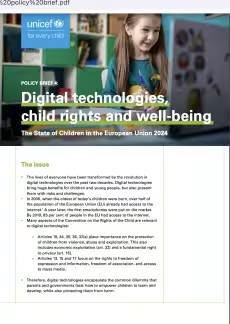
Digital technologies, child rights and well-being: The State of Children in the European Union 2024
Year
2024
Area
1.1
Description

Synthesises evidence across the European Union on how children engage with digital technologies, including patterns of access, use, benefits, and risks. It examines key issues such as digital inequalities, online safety, and the impact of digital environments on children’s development and well-being, including mental health. The brief highlights how social, economic, and structural factors shape children’s digital experiences and identifies key areas where policy action is needed to ensure that digital technologies support, rather than undermine, children’s rights and well-being.

Brief description
EU-focused synthesis of evidence on children’s access to, use of, and experiences with digital technologies, highlighting implications for mental health, well-being, and inequalities.
Country
EUROPE
Keywords
digital rights, online safety, digital inequalities, EU policy, child development
Resource Title
Digital technologies, child rights and well-being: The State of Children in the European Union 2024
Source
OECD
Topic
Guaranteeing access to early intervention and mental health services and support
Tools & Frameworks
Report
Language
EN
Relevant actions
Layers 1, 2 & 3
Use it to…
bring together cost-effective public health approaches and the policy levers needed to support them.
Where to look in this resource
The “Assessment and recommendations” chapter sets out the cross-cutting findings, cost-effectiveness and policy levers. The best-practice chapters most relevant to children, adolescents and young people are Zippy’s Friends (school-based social-emotional learning), Icehearts (long-term mentoring for children at higher risk), @ease (youth walk-in / low-threshold early support), “This is me” (youth mental health), Next Stop: Mum (perinatal depression screening) and SUPRA (suicide prevention, Austria).
Image
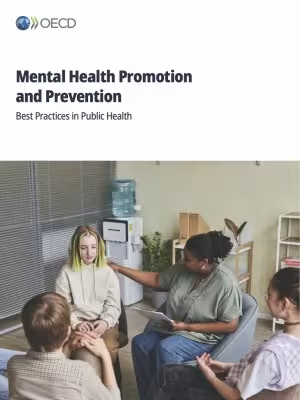
Mental Health Promotion and Prevention: Best Practices in Public Health (OECD 2025)
Age group
Setting
Year
2025
Area
2.2
Description

Synthesises international evidence on effective public health approaches to mental health promotion and prevention. The report highlights cost-effective interventions, policy levers, and implementation strategies, supporting governments in scaling up initiatives that improve population mental health and reduce long-term system burdens.

Brief description
OECD report on cost-effective public health approaches to mental health promotion and prevention.
Country
EUROPE
Keywords
cost-effectiveness, policy levers, scale-up, public health, mental health, promotion and prevention
Resource Title
Mental Health Promotion and Prevention: Best Practices in Public Health (OECD 2025)