Toolkit guide
Topic
Parental support
Tools & Frameworks
Best practices
Language
EN
Relevant actions
Action 1
Use it to…
define the professionals most suitable for delivering parenting support at different levels of intensity
Where to look in this resource
Framework for multi-sectoral support for parents
Image
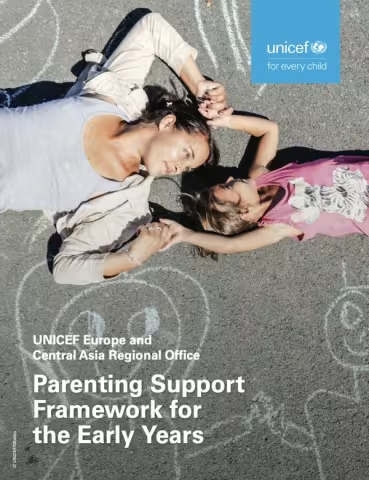
Parenting Support Framework for the Early Years
Area
2.3
Description

Developed by UNICEF Europe and Central Asia, the framework promotes a comprehensive, evidence-informed and adaptable approach to supporting parents and caregivers. It emphasises nurturing care, positive parenting, social and behaviour change approaches, universal and progressive service provision, and coordinated action across health, education, social protection and community sectors.

Brief description
A conceptual framework that provides a unified vision for parenting support from pregnancy to age 8, helping governments and stakeholders strengthen parenting support systems through coordinated action across sectors.
Keywords
caregiver support, positive parenting, social and behaviour change, nurturing care, conceptual framework
Resource Title
Parenting Support Framework for the Early Years
Topic
ECD
Tools & Frameworks
Best practices
Language
EN
Relevant actions
Action 1-4
Use it to…
understand how roles can be formally defined across ministries, with primary health care positioned as a central delivery and coordination platform within a broader multisectoral system.
Where to look in this resource
Pages 21-27 outline the context and importance of supporting ECD, as well as the strategic vision. Objectives 1 and 2 set out approaches to parental support and the need for resources and services for parents. Objective 3 sets out the context and interventions to address inequalities related to poverty and discrimination. Objectives 4-6 highlight the need for healthcare interventions to support physical and mental health. Goal D (pages 104-115) sets out areas to consider for effective implementation, including governance, workforce and monitoring. Pages 117-122 set out specific actions for implementation, while pages 122-171 outline specific strategic actions across the objectives
Image
Ireland's first five strategy
Area
2.3
Description

A Whole-of-Government 10-year strategy focused on supporting the development, health, and well-being of children from birth to age five and their families. The strategy is built on four main goals: strengthening families and communities, ensuring optimum physical and mental health, promoting positive play-based early learning, and creating an effective early childhood system.

Brief description
Ireland's First 5 strategy is a best practice example indicating how ECD can be addressed across the whole of government, including key areas for intervention and using a progressive universalism approach.
Keywords
whole-of-government; progressive universalism; family services; health equity; implementation planning
Pdf file
Resource Title
Ireland’s First 5 Strategy
Topic
Parental support
Tools & Frameworks
Tools & Frameworks
Language
EN
Relevant actions
Action 10
Use it to…
identify transferable policy principles
Where to look in this resource
Mapping work across 21 countries to assess the status of 10 gender-responsive family policies: maternity leave, paternity leave, parental leave, carer’s leave, flexible working arrangements, the early childhood education and care system, the pre-primary education system, paid breastfeeding breaks, sick leave, and family and child benefits.
Image
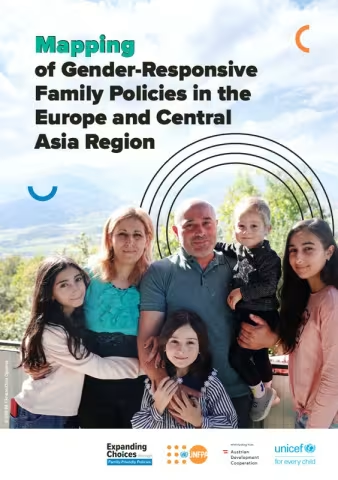
UNICEF Mapping of gender-responsive family policies in the Europe and Central Asia region
Area
2.2
Description

The resource reviews national family policies such as parental leave, childcare support, and social protection measures through a gender lens. It highlights variations across countries and identifies common gaps affecting caregivers’ ability to provide nurturing care. The mapping supports comparative analysis and policy benchmarking.

Brief description
This mapping provides an overview of family policies across the region, with a focus on gender responsiveness and caregiver support.
Keywords
gender equality; family policy; parental leave; policy benchmarking; caregiver support
Resource Title
UNICEF Mapping of gender-responsive family policies

Topic
Early intervention
Tools & Frameworks
Tools & Frameworks
Language
EN
Relevant actions
Action 5
Use it to…
understand the development and implementation of consistent quality standards for ECI
Where to look in this resource
To understand how to implement the European Child Guarantee through a comprehensive policy framework
Area
2.2
Description

Establishes a family-centred ECI model delivered in children's natural environments, with developmental assessment, waiting-time targets, quality standards, financing mechanisms, and cross-sector governance involving health, education, and social services

Brief description
National quality framework setting standards for timely, universal, publicly funded early childhood intervention services for children aged 0-6 years
Country
Spain
Keywords
quality standards; developmental assessment; waiting times; public financing; service integration
Resource Title
Spain’s ECI quality standards
Topic
ECD
Tools & Frameworks
Tools & Frameworks
Language
EN
Relevant actions
Action 3
Use it to…
assesses the accuracy and feasibility of 27 tools for early childhood development outcome measurement (25 individual and 2 population-level tools)
Where to look in this resource
-The results include a heat map of accuracy and feasibility ratings for each measurement tool as well as an overview of each tool assessed
Image
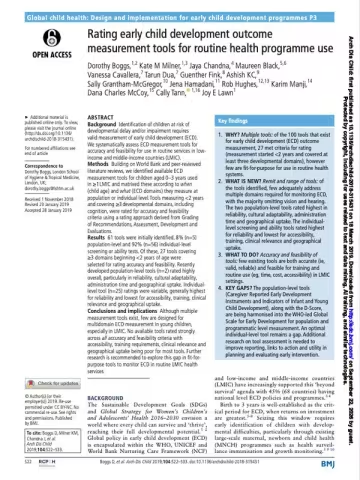
Rating early child development outcome measurement tools for routine health programme use.
Area
2.2
Description

In this analysis, 27 tools for early childhood development outcome measurement (25 individual and 2 population-level tools) were rated across a range of accuracy and feasibility criteria

Brief description
This paper assesses the accuracy and feasibility of ECD measurement tools
Keywords
measurement tools; developmental assessment; tool selection; feasibility analysis; outcome monitoring
Resource Title
Rating early child development outcome measurement tools for routine health programme use.
Topic
ECD
Tools & Frameworks
Tools & Frameworks
Language
EN
Relevant actions
Actions 1-2
Use it to…
use a structured assessment tool to identify solutions to meet defined policy objectives
Where to look in this resource
- Tool description (pgs. 3-4);
- Tool's nine priority areas with associated goals overview (pgs. 4-5) followed by breakdown by priority area (Enabling environment for strengthening support for ECD and protection of child rights (pgs. 7-8); Parenting and responsive caregiving (pg. 9); Child health (pgs. 10-11); Nutrition (pgs. 12 -14); Play and learning (pg. 15); Developmental monitoring (pgs. 16-17); Early intervention for children with developmental difficulties (pgs. 18-19); Safety and security (pgs. 20-21); Parental well-being (pgs. 22-23));
- General guidance and steps for using the tool and measuring results (pgs. 24-28) with country-level specific and process advice (pgs. 26-29).
Image
Early childhood development country situation analysis- Assessment tool and methodological guidance
Area
2.2
Description

The ECD Country Situation Analysis offers a comprehensive framework and step‑by‑step methodology for assessing how countries support early childhood development at national and subnational levels. It examines governance, financing, service delivery, workforce capacity, data systems, and equity considerations across relevant sectors such as health, education, and social protection. The tool promotes participatory and multisectoral analysis, encouraging collaboration among government actors, partners, and stakeholders. Its findings are intended to inform evidence‑based planning, policy reform, and investment decisions.

Brief description
The Early Childhood Development (ECD) Country Situation Analysis is a structured assessment tool developed to help countries systematically review the status of ECD policies, services, and systems. It provides methodological guidance to identify strengths, gaps, and priorities for action across sectors.
Keywords
situation analysis; service mapping; governance assessment; workforce capacity; policy planning
Resource Title
Early childhood development country situation analysis-Assessment tool and methodological guidance
Topic
Early Intervention
Tools & Frameworks
Tools & Frameworks
Language
EN
Use it to…
identify policy priorities based on the requirements for a family-centred ECI service
Where to look in this resource
It supports policymakers to select policy priorities by providing a justification of the importance of ECI (p.4) and what a family-centred ECI service requires (p.5-6)
Image
Building a sustainable and inclusive Early Childhood Intervention system: Policy brief
Area
2.1
Description

The brief synthesizes evidence on why early childhood intervention is an essential component of effective ECD systems, highlighting the consequences of delayed identification and fragmented service delivery. It presents key principles for system design, including inclusiveness, family‑centred approaches, cross‑sectoral coordination, and long‑term sustainability. The document focuses on policy levers rather than service models, making it applicable across diverse national contexts

Brief description
This policy brief outlines the rationale and core components for establishing sustainable, inclusive early childhood intervention (ECI) systems that respond to developmental risks early and equitably.
Keywords
service integration; family-centred care; sustainability; equity of access; policy development
Resource Title
Building a Sustainable and Inclusive Early Childhood Intervention System – Policy Brief
Topic
Early Intervention
Tools & Frameworks
Tools & Frameworks
Language
EN
Use it to…
find evidence‑based insights into the strengths and weaknesses of ECI systems to inform policy decisions
Where to look in this resource
It provides an overview of what early childhood intervention services entails (p.21-25), a theory of change to support policymakers in defining objectives and outcomes (p.30) alongside an overview of different research methodologies to support an analysis of the ECD landscape (in relation to objectives and outcomes described in the theory of change) (Chapters 6-8)
Image
Methodological Guide: Research for national situation analysis on early childhood intervention
Area
2.1
Description

The guide outlines key concepts, research questions, and methodological steps for assessing early childhood intervention systems at national level. It supports the collection and analysis of qualitative and quantitative data across sectors such as health, education, and social services. Emphasis is placed on understanding governance structures, service availability, access, quality, workforce capacity, and coordination mechanisms. The guide is designed to ensure consistency, rigor, and comparability in national analyses, while allowing adaptation to country contexts.

Brief description
This methodological guide provides structured guidance for conducting national situation analyses on early childhood intervention. It supports systematic research to map existing services, policies, and gaps affecting young children requiring early intervention
Keywords
research methods; theory of change; system assessment; evidence generation; policy analysis
Resource Title
Methodological Guide for National Situation Analyses on ECI
Topic
ECD
Tools & Frameworks
Tools & Frameworks
Language
EN
Use it to…
assess the accuracy and feasibility of ECD measurement tools
Where to look in this resource
-The results include a heat map of accuracy and feasibility ratings for each measurement tool as well as an overview of each tool assessed
Image
Rating early child development outcome measurement tools for routine health programme use.
Area
2.1
Description

In this analysis, 27 tools for early childhood development outcome measurement (25 individual and 2 population-level tools) were rated across a range of accuracy and feasibility criteria

Brief description
This paper assesses the accuracy and feasibility of ECD measurement tools
Keywords
measurement tools; developmental assessment; tool selection; feasibility analysis; outcome monitoring
Resource Title
Rating early child development outcome measurement tools for routine health programme use.
Topic
Early Detection
Tools & Frameworks
Studies
Language
EN
Use it to…
benchmark early detection systems across Europe and identify different types of data collected in surveillance systems that can shape a policy response
Where to look in this resource
Highlights how disruptions to health services can lead to widespread missed opportunities for early detection, strengthening the case for resilient system design and the need for intervention
Image
Missed opportunities: The unknown impact of the COVID-19 pandemic on early childhood development in the WHO European region
Area
2.1
Description

This report explores the largely unmeasured consequences of the COVID‑19 pandemic on early childhood development in the WHO European Region. It reviews disruptions to essential services such as health care, early learning, childcare, and family support, as well as increased stressors on caregivers and households. The analysis highlights significant data gaps and missed opportunities to monitor, protect, and prioritize young children’s development during crisis response and recovery. It calls for stronger systems, better data, and child‑centred policies to mitigate long‑term developmental and social impacts.

Brief description
Missed opportunities examines how the COVID‑19 pandemic has affected early childhood development across the WHO European Region, highlighting gaps in evidence and response. The report underscores concerns about the hidden and long‑term impacts on young children and families.
Keywords
pandemic impact; service disruption; health inequalities; data gaps; system resilience
Resource Title
Missed Opportunities: the impact of COVID-19 on ECD