Toolkit guide
Topic
Parental support
Tools & Frameworks
Best practices
Language
EN
Use it to…
Define parenting support as a core objective of ECD systems
Where to look in this resource
Framework for multi-sectoral support for parents
Image
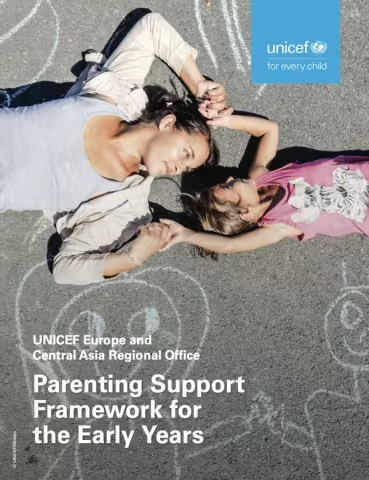
Parenting Support Framework for the Early Years
Area
1.3
Description

Developed by UNICEF Europe and Central Asia, the framework promotes a comprehensive, evidence-informed and adaptable approach to supporting parents and caregivers. It emphasises nurturing care, positive parenting, social and behaviour change approaches, universal and progressive service provision, and coordinated action across health, education, social protection and community sectors.

Brief description
A conceptual framework that provides a unified vision for parenting support from pregnancy to age 8, helping governments and stakeholders strengthen parenting support systems through coordinated action across sectors.
Keywords
caregiver support, positive parenting, social and behaviour change, nurturing care, conceptual framework
Resource Title
Parenting Support Framework for the Early Years
Topic
Parental support
Tools & Frameworks
Best practices
Language
EN
Use it to…
provides a practical systems framework for designing, strengthening and scaling parenting support programmes
Where to look in this resource
Framework for multi-sectoral support for parents
Image
Parenting Support Framework for the Early Years
Area
1.2
Description

Developed by UNICEF Europe and Central Asia, the framework promotes a comprehensive, evidence-informed and adaptable approach to supporting parents and caregivers. It emphasises nurturing care, positive parenting, social and behaviour change approaches, universal and progressive service provision, and coordinated action across health, education, social protection and community sectors.

Brief description
A conceptual framework that provides a unified vision for parenting support from pregnancy to age 8, helping governments and stakeholders strengthen parenting support systems through coordinated action across sectors.
Keywords
caregiver support, positive parenting, social and behaviour change, nurturing care, conceptual framework
Resource Title
UNICEF Parenting Framework
Topic
ECD
Tools & Frameworks
Tools & Frameworks
Language
EN
Use it to…
provides a framework to support ECD policies, with strategic actions for change
Where to look in this resource
Pages 1-11 highlight the background and key areas for action for development, nutrition and physical health, to support the case for ECD policies
Image
Framework on Early Childhood Development in the WHO European Region
Area
1.2
Description

Comprehensive strategic vision for improving outcomes for young children by promoting healthy development, well-being and equity from pregnancy through the early years. The framework highlights the critical importance of early childhood as a foundation for lifelong health, learning and social participation, and calls for coordinated action across health, education, social care and other sectors to address the wider determinants of child development. It provides guidance for countries to strengthen policies, systems and workforce capacity to ensure that every child has the best possible start in life

Brief description
The Framework on Early Childhood Development in the WHO European Region outlines a strategic approach to support healthy development, well‑being, and equity for young children across the region. It emphasizes integrated, multisectoral action to ensure all children have the best possible start in life
Keywords
health equity; life-course approach; policy development; child wellbeing; cross-sector collaboration
Resource Title
Framework on Early Childhood Development in the WHO European Region
Topic
Early Intervention
Tools & Frameworks
Tools & Frameworks
Language
EN
Relevant actions
Action 2
Use it to…
understand the rationale and core components required for sustainable, inclusive early childhood intervention (ECI) systems that respond to developmental risks early and equitably.
Where to look in this resource
It supports policymakers to select policy priorities by providing a justification of the importance of ECI (p.4) and what a family-centred ECI service requires (p.5-6)
Image
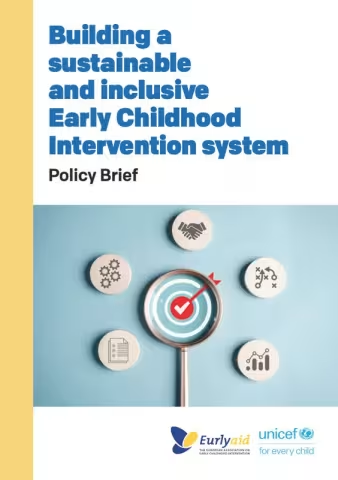
Building a sustainable and inclusive Early Childhood Intervention system: Policy brief
Area
1.1
Description

The brief synthesizes evidence on why early childhood intervention is an essential component of effective ECD systems, highlighting the consequences of delayed identification and fragmented service delivery. It presents key principles for system design, including inclusiveness, family‑centred approaches, cross‑sectoral coordination, and long‑term sustainability. The document focuses on policy levers rather than service models, making it applicable across diverse national contexts

Brief description
This policy brief outlines the rationale and core components for establishing sustainable, inclusive early childhood intervention (ECI) systems that respond to developmental risks early and equitably.
Keywords
service integration; family-centred care; sustainability; equity of access; policy development
Resource Title
Building a sustainable and inclusive Early Childhood Intervention system - policy brief
Topic
Parenting support
Tools & Frameworks
Best practices
Language
EN
Relevant actions
Action 7-10
Use it to…
see how parenting support interventions are delivered through universal, targeted and intensive services, supported by evidence-informed decision-making.
Where to look in this resource
Highlights how parenting support interventions are delivered through universal, targeted and intensive services, supported by evidence-informed decision-making.
Area
2.2
Description

Estonia’s Parent Support Strategy provides a universal, layered system of parenting support that combines routine guidance through child health services with targeted and intensive interventions for families with additional needs. Support includes parenting programmes such as Incredible Years, digital resources, family hubs, mediation services, and specialist therapeutic support.

Brief description
A universal, national offer of parenting support which is comprehensive and ‘layered’ (providing universal support for all parents, targeted support for those at risk, and intensive support for complex cases).
Country
Estonia
Keywords
parenting support; layered support; policy; children's rights; incredible years
Resource Title
Estonia’s layered parenting support system

Topic
Parenting support
Tools & Frameworks
Best practices
Language
EN
Use it to…
understand home visiting as a strategy for universal parenting support
Where to look in this resource
Informs home visiting as a strategy for universal parenting support
Area
2.1
Description

Key Scottish policies, legislation, guidance and evidence relevant to child health, early childhood development, health visiting and family support, including Universal Health Visiting Pathway, child protection guidance and maternal and child health policy

Brief description
Scottish policy and guidance for child health, health visiting and early years services
Keywords
health visiting; policy; legislation; child health; early years
Resource Title
Policy, legislation and guidance on health/home visiting -Scotland
Topic
Parenting support
Tools & Frameworks
Tools & Frameworks
Language
EN
Relevant actions
Action 8-9
Use it to…
access guidance on caregiver skills training for families of children aged 2–9 years with developmental delays or disabilities
Where to look in this resource
A practical, scalable approach to supporting children with developmental delays and disabilities through caregiver-led interventions, helping policymakers strengthen inclusive early childhood development services and expand access to support
Area
2.2
Description

The programme provides evidence-based guidance for supporting families of children aged 2-9 years with developmental delays or disabilities. Designed for delivery in community and low-resource settings, it equips caregivers with practical skills to promote communication, engagement, positive behaviour and daily living skills, while offering a scalable model for strengthening early identification and family-centred support services

Brief description
A scalable, evidence-based approach to helping caregivers support the development and well-being of children with developmental delays or disabilities. [who.int], [who.int]
Keywords
caregiver training; developmental disabilities; capacity building; family support; inclusion
Resource Title
WHO Caregiver skills training for families of children with developmental delays or disabilities
Topic
ECD
Tools & Frameworks
Tools & Frameworks
Language
EN
Use it to…
understand available evidence regarding prevention, identification and intervention for developmental difficulties
Where to look in this resource
Understand available evidence regarding prevention, identification and intervention for developmental difficulties
Image
Developmental difficulties in early childhood: prevention, early identification, assessment and intervention in low- and middle-income countries: a review
Area
2.1
Description

The review examines risk factors, prevention strategies, approaches to early identification and assessment, and evidence-based interventions, with a particular focus on strengthening the capacity of health systems and frontline providers to support children and families in low- and middle-income settings.

Brief description
A comprehensive overview of the evidence on developmental difficulties in children aged 0-3 years, including cognitive, language, social-emotional, behavioural and neuromotor development.
Keywords
developmental disabilities; early identification; intervention; prevention; health systems
Resource Title
Developmental difficulties in early childhood: prevention, early identification, assessment and intervention in low-and middle-income countries: a review
Topic
Parenting support, ECD
Tools & Frameworks
Tools & Frameworks
Language
EN
Use it to…
awaiting publication
Where to look in this resource
Informs policy design for a UPHV model
Area
2.1
Description

Describes the key features of the Universal Progressive Home Visiting (UPHV) model, a health systems approach that provides structured support to all families with young children while offering additional, targeted support to those with greater needs. The resource outlines the principles, service components and delivery mechanisms of effective home visiting programmes, highlighting their role in promoting child health, development, responsive caregiving and family well-being during the early years

Brief description
Describes the key features of the Universal progressive model of home visiting for young children and their families,
Keywords
universal progressive model; home visiting; parenting support; policy; health systems
Resource Title
Universal-progressive home visiting model
Topic
Parenting support, ECD
Tools & Frameworks
Studies
Language
EN
Relevant actions
Action 10
Use it to…
advocacy and policy guidance for promoting home visiting for young children and families as a key strategy to improve health and development in early childhood.
Where to look in this resource
Advocacy and policy guidance for promoting home visiting for young children and families as a key strategy to improve health and development in early childhood.
Area
2.2
Description

Summarises findings from a series of systematic literature reviews on the effectiveness of HV programmes in middle- and high-income countries, highlighting benefits for young child health and development, as well as maternal wellbeing nd parenting. Identifies the main implications of the findings for policy and practice and outlines key considerations for implementation.

Brief description
A Policy brief providing an overview of the key effects of home visiting services on child health and wellbeing in high- and middle-income countries.
Keywords
policy; home visiting; evidence-based; programme design; child development
Resource Title
Policy brief: The effects of home visiting programmes on key dimensions of the well-being of children and families in high and middle-income countries. Evidence for policy and programme design