Toolkit guide
Topic
Early Detection
Tools & Frameworks
Best practices
Language
EN
Relevant actions
Action 1-3
Use it to…
see how clear referral pathways, named coordinating professionals and national guidance support continuity across services and feed into interoperable data and surveillance systems.
Where to look in this resource
Review of the Child Health System (CHS) devliery mechanism of the Child Health Programme
Image
Scotland's Child Health Programme
Area
2.3
Description

This website base acts as a link to several explainers and resources regarding NHS Scotland's Child Health Programme - the universal health promotion programme to all children and their families. It includes information about the programme's content, delivery, the Child Health System programme, and monitoring.

Brief description
This Public Health Scotland landing page links to information about Scotland's Child Health Programme including the Child Health System and support.
Keywords
child health surveillance; universal services; screening programme; developmental monitoring; health records
Resource Title
Scotland’s Child Health Programme
Topic
Early Detection
Tools & Frameworks
Best practices
Language
EN
Relevant actions
Action 3-4
Use it to…
understand the characteristics of an effective developmental monitoring system and national data surveillance system
Where to look in this resource
- Overview of the Child Health Programme, with sub-headings for different areas of the system and programme
Image
Scotland's Child Health Programme
Area
2.2
Description

This website base acts as a link to several explainers and resources regarding NHS Scotland's Child Health Programme - the universal health promotion programme to all children and their families. It includes information about the programme's content, delivery, the Child Health System programme, and monitoring.

Brief description
This Public Health Scotland landing page links to information about Scotland's Child Health Programme including the Child Health System and support.
Country
Scotland
Keywords
child health surveillance; universal services; screening programme; developmental monitoring; health records
Resource Title
Scotland’s Child Health Programme
Topic
ECD
Tools & Frameworks
Tools & Frameworks
Language
EN
Use it to…
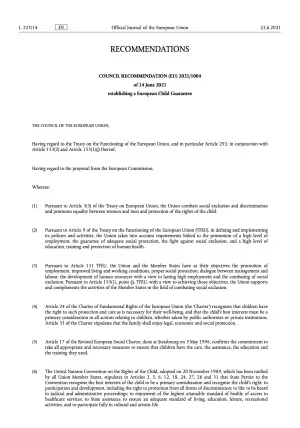
requires EU Member States to ensure access to healthcare, education and care for children at risk of poverty or exclusion, including guaranteed access to a set of services that are foundational to early child development
Where to look in this resource
This landing page links to a series of information about The European Child Guarantee (ECG). This includes:
- Statistics on why ECG matters
- Main actions and key objectives from the ECG
- Links to the EU countries' national action plans on ECG and also progress reports
- Outlines three phases of preparatory action, with sub links on feasibility assessment, cost-benefit analysis, and seven implementation 'policy deep dives'
- A common monitoring framework, linking to an update report from autumn 2025
Image
80_ECG
Area
1.2
Description

The European Child Guarantee translates children’s social rights into concrete national commitments by requiring Member States to remove barriers to essential services for vulnerable children. It explicitly recognises early childhood as a critical period for preventing poverty, exclusion and unequal life chances. Through National Action Plans and targeted use of EU funds, it creates a policy framework for strengthening early childhood services, including health and early care, in an equitable and coordinated way.

Brief description
The European Child Guarantee is an EU policy instrument that commits Member States to ensure effective access for children in need to essential services, including healthcare, early childhood education and care, and nutrition. It places children at risk of poverty or social exclusion at the centre of national action.
Keywords
child poverty; social inclusion; service access; rights-based policy; equity
Resource Title
European Child Guarantee
Topic
ECD
Tools & Frameworks
Tools & Frameworks
Language
EN
Relevant actions
Action 1
Use it to…
situate national-level data and understand a country’s needs
Where to look in this resource
- Child mortality statistics in Eastern European countries (pg. 11)
- Child growth failure statistics, general (pg. 13)
Image
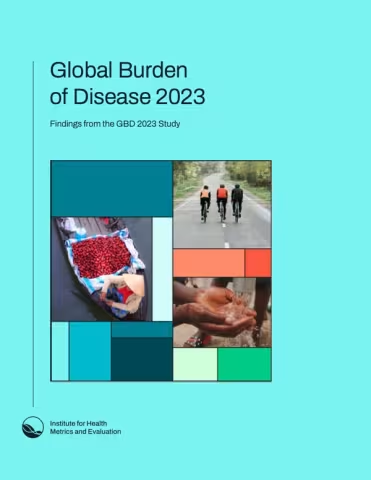
2023 Global Burden of Disease (GBD)
Area
1.1
Description

The 2023 GBD offers population‑level evidence on the prevalence and impact of health conditions, disabilities and risk factors affecting children in early life. By quantifying years lived with disability and long‑term health loss, it makes visible the burden associated with developmental conditions that often remain under‑detected in early childhood. The data support a public‑health rationale for early identification, prevention and timely intervention to reduce lifelong health and social consequences.

Brief description
The 2023 Global Burden of Disease (GBD) study provides comprehensive, comparable estimates of disease burden, disability and mortality across countries and age groups, including early childhood. It highlights the scale and distribution of conditions that affect children’s development and long‑term health.
Keywords
burden of disease; population health; disability data; mortality trends; epidemiology
Resource Title
2023 Global Burden of Disease
Topic
Parental support
Tools & Frameworks
Tools & Frameworks
Language
EN
Use it to…
it supports translation of gender‑responsive policy commitments into practical service delivery and workforce development.
Where to look in this resource
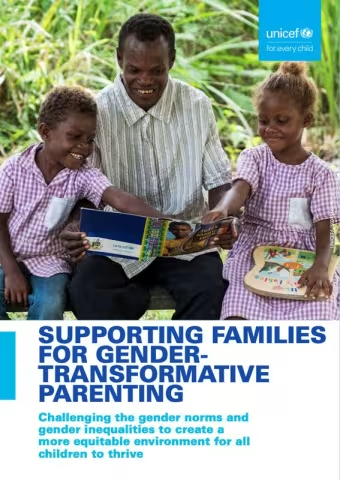
This training package is a helpful resource for countries to utilise to support addressing gender-transformative parenting as a part of the everyday practice of the critical frontline workers and implementers of different types of parenting programmes
Image
Resource package and training modules for promoting gender-responsive parenting
Area
2.1
Description

The package includes practical modules and tools designed to strengthen frontline workers’ capacity to address gender norms and promote equitable caregiving practices within families. It is intended for use across health, social service, and community settings. The materials support consistent integration of gender considerations into parenting support services.

Brief description
This resource package provides training materials to support frontline workers in promoting gender‑responsive and gender‑transformative parenting practices
Keywords
frontline workforce; gender norms; caregiver engagement; training resources; capacity building
Resource Title
Resource package and training modules for promoting gender-responsive parenting
Topic
Parental support
Tools & Frameworks
Studies
Language
EN
Use it to…
it provides an evidence base to inform selection and adaptation of parenting support approaches suited to national contexts and capacities.
Where to look in this resource
This review categorises parenting support programmes by the evidence base and provides information on resourcing and programme delivery, helping policy makers to develop evidence based objectives, inform resource allocation and adapt models for country specific contexts. Pages 9-16.
Image
Supporting parents and caregivers: mapping and scoping review of experiences in Europe and Central Asia - WHO
Area
1.3
Description

The review analyses a wide range of parenting programmes, documenting delivery models, target populations, and implementation approaches. It highlights common design features and contextual factors influencing effectiveness and coverage. The resource is descriptive rather than prescriptive, supporting reflection rather than direct replication.

Brief description
This scoping review synthesizes evidence on parenting support programmes implemented across Europe and Central Asia.
Keywords
evidence review; programme adaptation; implementation models; benchmarking; service coverage
Resource Title
Supporting parents and caregivers: mapping and scoping review of experiences in Europe and Central Asia - WHO
Topic
Parental support
Tools & Frameworks
Studies
Language
EN
Relevant actions
Action 3
Use it to…
benchmark and identify gaps in provision for parenting support
Where to look in this resource
A review of evidence on parenting programmes, highlighting those with a solid evidence base which may be helpful in identifying the breadth of services available in order to tailor specific services to need in a country context. Also helpful in terms of benchmarking, gap analysis and cross country learning. Case studies of parenting programmes, pages 19-22.
Image
Supporting parents and caregivers: mapping and scoping review of experiences in Europe and Central Asia - WHO
Area
1.1
Description

The review analyses a wide range of parenting programmes, documenting delivery models, target populations, and implementation approaches. It highlights common design features and contextual factors influencing effectiveness and coverage. The resource is descriptive rather than prescriptive, supporting reflection rather than direct replication.

Brief description
This scoping review synthesizes evidence on parenting support programmes implemented across Europe and Central Asia.
Keywords
evidence review; programme adaptation; implementation models; benchmarking; service coverage
Resource Title
Supporting parents and caregivers: mapping and scoping review of experiences in Europe and central Asia – WHO
Topic
Parental support
Tools & Frameworks
Tools & Frameworks
Language
EN
Use it to…
it helps policymakers identify how family and gender policies interact with ECD and parenting support objectives, supporting more equitable policy design.
Where to look in this resource
The mapping tool can help to identify whether parenting support services are gender responsive.
Image
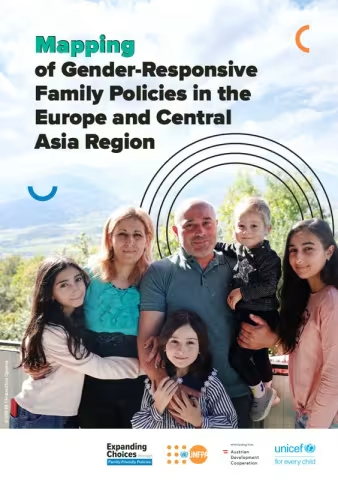
UNICEF Mapping of gender-responsive family policies in the Europe and Central Asia region
Area
2.1
Description

The resource reviews national family policies such as parental leave, childcare support, and social protection measures through a gender lens. It highlights variations across countries and identifies common gaps affecting caregivers’ ability to provide nurturing care. The mapping supports comparative analysis and policy benchmarking.

Brief description
This mapping provides an overview of family policies across the region, with a focus on gender responsiveness and caregiver support.
Keywords
gender equality; family policy; parental leave; policy benchmarking; caregiver support
Resource Title
UNICEF Mapping of gender-responsive family policies in the Europe and Central Asia region

Topic
Parental support
Tools & Frameworks
Tools & Frameworks
Language
EN
Use it to…
it helps policymakers identify how family and gender policies interact with ECD and parenting support objectives, supporting more equitable policy design.
Where to look in this resource
Mapping work across 21 countries to assess the status of 10 gender-responsive family policies: maternity leave, paternity leave, parental leave, carer’s leave, flexible working arrangements, the early childhood education and care system, the pre-primary education system, paid breastfeeding breaks, sick leave, and family and child benefits.
Image
UNICEF Mapping of gender-responsive family policies in the Europe and Central Asia region
Area
1.3
Description

The resource reviews national family policies such as parental leave, childcare support, and social protection measures through a gender lens. It highlights variations across countries and identifies common gaps affecting caregivers’ ability to provide nurturing care. The mapping supports comparative analysis and policy benchmarking.

Brief description
This mapping provides an overview of family policies across the region, with a focus on gender responsiveness and caregiver support.
Keywords
gender equality; family policy; parental leave; policy benchmarking; caregiver support
Resource Title
UNICEF Mapping of gender-responsive family policies in the Europe and Central Asia region

Topic
Parental support
Tools & Frameworks
Tools & Frameworks
Language
EN
Relevant actions
Action 3
Use it to…
understand parenting support workforce needs
Where to look in this resource
Appendix 7 describes how to undertake monitoring and quality assurance of services delivered in relation to the parent support workforce. Page 43
Image
Parenting Support Workforce Needs Assessment Tool
Area
3.1
Description

The assessment tool helps countries examine who delivers parenting support services, what competencies they possess, and where additional training or institutional support may be required. It enables analysis across different providers and sectors, including health, social services, and community‑based programmes. Findings can inform workforce development strategies and resource allocation.

Brief description
This tool supports assessment of workforce capacity, skills, and gaps among personnel delivering parenting support services.
Keywords
layered services; nurturing care; service design; financing models; family-centred care
Resource Title
Parent Support Workforce Needs Assessment Tool